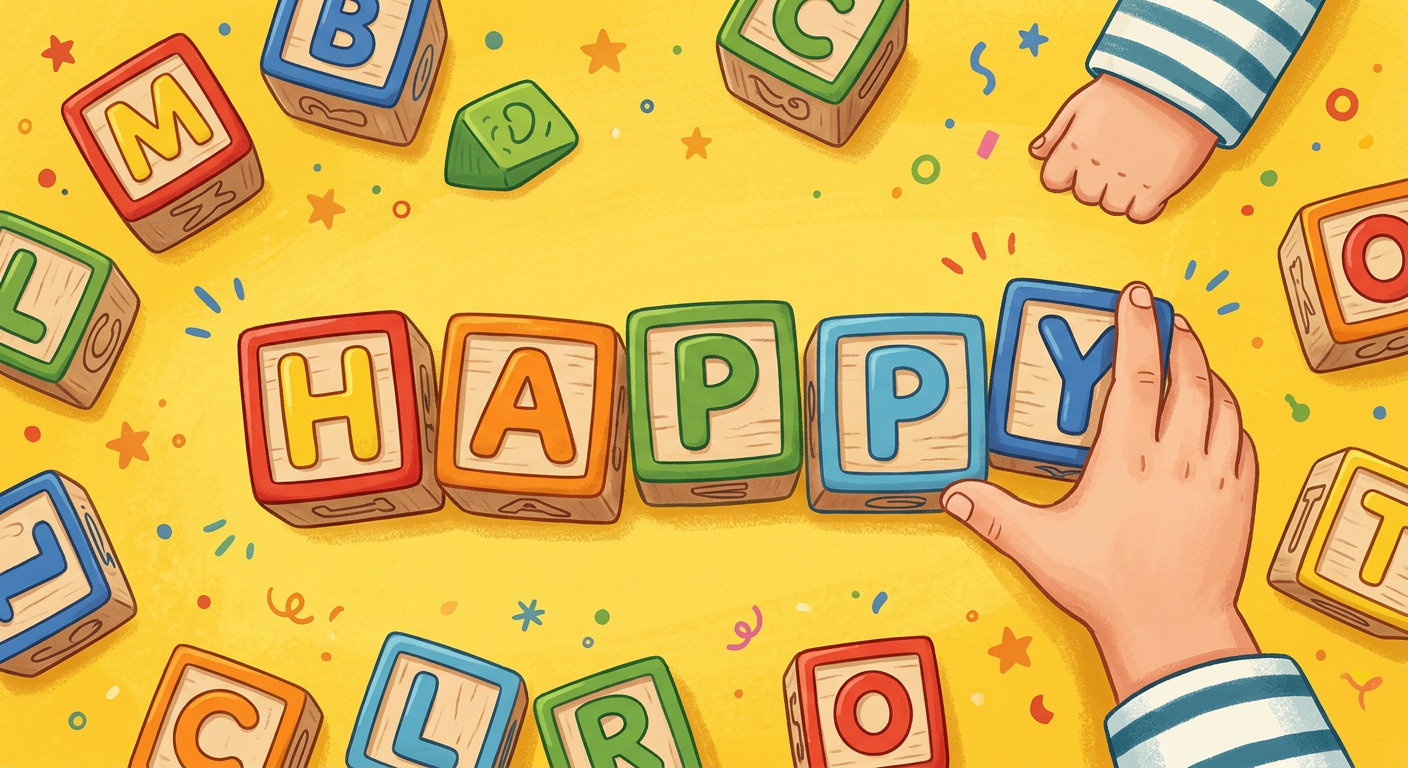
Word unscrambling is one of the most effective ways to turn spelling and vocabulary practice into a game. Instead of memorizing lists, children rearrange letters, discover patterns, and experience the satisfaction of solving a puzzle. When paired with our word unscrambler, the activity becomes even richer: kids can check their work, discover words they missed, and explore how the same letters can form many different words. This guide explains the educational value of unscrambling, how to use the tool with children, and age-appropriate activities for home and the classroom.
Why Word Unscrambling Is Great for Kids
Unscrambling exercises several skills at once, which is why teachers and educational researchers have used it for decades. When a child unscrambles a word, they practice:
- Letter recognition: Identifying each letter and distinguishing similar shapes like b/d and p/q.
- Phonics: Sounding out combinations and noticing how vowel placement changes pronunciation.
- Spelling: Paying attention to exact letter order, which is the core of accurate spelling.
- Vocabulary: Encountering new words in a memorable, active context rather than passively reading them.
- Problem-solving: Treating a word as a puzzle to solve builds persistence and logical thinking.
- Pattern recognition: Spotting common letter pairs like TH and CH accelerates reading fluency.
Unlike rote spelling drills, unscrambling feels like play. That matters because children learn faster and retain more when they are engaged. A child who groans at a spelling list will happily spend fifteen minutes rearranging letter tiles to find hidden words.
How to Use the Tool With Kids
Our word unscrambler is simple enough for children to use, but a little guidance at the start makes the experience far more productive. Here is a step-by-step approach for parents and teachers:
1. Start with a short, familiar word
Pick a three- or four-letter word the child already knows, such as CAT or FISH. Scramble the letters yourself — for example, TCA — and ask the child to put them in the right order. The word scrambler tool can generate scrambled versions for you, which saves time and ensures the scramble is genuinely challenging.
2. Let the child attempt it by hand first
Encourage the child to write or arrange physical tiles before using the tool. This is where the real learning happens. Resist the urge to jump in with the answer. If they get stuck, offer hints: "What sound does the letter at the start make?" or "Can you find the vowel?"
3. Use the tool to check and extend
Once the child has an answer — or after a reasonable struggle — enter the letters into the word unscrambler together. Show them the results. This does two things: it confirms whether their answer was correct, and it reveals other words hiding in the same letters. Finding that CAT, ACT, and TAC all come from the same three letters is a genuine "aha" moment that builds vocabulary and flexibility.
4. Talk about the new words
When the tool reveals an unfamiliar word, take a moment to explain it. "ACT means to do something, like in a play." This turns a tool check into a mini vocabulary lesson. Keep a small notebook of words the child discovers so they can review them later.
Age-Appropriate Activities
The beauty of unscrambling is that it scales effortlessly from kindergarten to middle school. Here are activities tailored to different age ranges.
Ages 6–7: Three-letter word builders
Use simple consonant-vowel-consonant words: CAT, DOG, SUN, HAT, BIG, RED. Scramble each one and ask the child to rebuild it. Keep sessions short — five to ten minutes — and celebrate every success. At this age, physical letter tiles or magnetic letters work better than pencil and paper.
Ages 8–9: Four- and five-letter challenges
Introduce words with digraphs and doubled letters: FISH, CHAIR, TREE, BREAD, CLOCK. Ask the child to find the digraph first ("Can you spot the TH?"). Use the tool with a length filter set to four or five so the result list stays short and readable. Our 5-letter word unscrambler is perfect for this stage.
Ages 10–11: Find-all-the-words puzzles
Give the child a six- or seven-letter word like GARDEN or PLANETS, scrambled, and challenge them to find as many smaller words as possible before checking with the tool. This builds the anagram-solving skill and dramatically expands vocabulary. Set a timer for five minutes to add a fun competitive element.
Ages 12+: Competitive and creative unscrambling
Older children can tackle timed challenges, multi-word anagrams, and word-game strategy. Introduce the concept of sorting by score and discuss how high-value letters like Q and Z change strategy. They can also use the word scrambler to create puzzles for siblings or classmates, which reinforces learning through teaching.
Vocabulary Building Through Discovery
One of the most powerful aspects of unscrambling is that it introduces new words in context. When a child unscrambles T, R, A, I, N, E, R and discovers TRAINER, RAINER, RETAIN, and NITRATE, they are not just finding words — they are seeing how prefixes, suffixes, and roots combine. This structural understanding of language is far more durable than memorizing definitions.
To maximize vocabulary gains, keep a "discovery log." Each time the tool reveals an unfamiliar word, the child writes it down with a short definition and a sentence of their own. Reviewing the log weekly turns one-off discoveries into lasting knowledge.
Spelling Practice That Doesn't Feel Like Drill
Traditional spelling practice — writing a word ten times — is effective but tedious. Unscrambling achieves the same letter-order reinforcement through puzzle-solving, which children find genuinely enjoyable. Here is how to structure it:
- Pre-test scramble: Take the week's spelling words, scramble each one, and have the child unscramble them. This reviews every word actively.
- Self-checking: After unscrambling, the child enters the letters into the tool to verify. This builds independence and self-correction.
- Error analysis: When a child misspells a word on a test, scramble the correct spelling and have them unscramble it three times over the week. Active reconstruction cures common errors like reversed letters.
- Mixed review: Combine words from past weeks into one big letter set and challenge the child to find them all. This combats forgetting through spaced repetition.
Using Unscrambling in the Classroom
Teachers can integrate word unscrambling across the curriculum, not just in spelling lessons. Here are practical ideas:
- Morning warm-ups: Display a scrambled vocabulary word on the board. Students unscramble it and write a definition as they arrive. This settles the class and primes them for the day's content.
- Subject-specific vocabulary: Scramble science terms (PHOTOSYNTHESIS), social studies names, or math vocabulary. Unscrambling reinforces both spelling and meaning.
- Differentiation: The length filter lets you give the same letter set to the whole class while adjusting difficulty. Struggling students search for three- and four-letter words; advanced students hunt for the full-length anagram.
- Station activities: Set up a word-work station with tablets or laptops where students unscramble themed words independently while you run small groups.
- Peer challenges: Pairs of students scramble words for each other using the word scrambler, then trade and solve. Creating the puzzle is as educational as solving it.
Tips for Parents at Home
You do not need to be a teacher to make unscrambling a valuable part of home learning. A few principles make a big difference:
- Keep it short and frequent. Ten minutes daily beats an hour once a week. Consistency builds the habit and the skill.
- Praise effort, not just correctness. Celebrate the attempt and the reasoning, even if the answer is wrong. "I love how you found the vowel first!" builds confidence.
- Let the child drive the tool. Typing the letters and clicking search gives the child ownership. You guide; they act.
- Connect words to life. If you unscramble KITCHEN, talk about what is in your kitchen. Linking words to real experience deepens retention.
- Make it a game, not a test. Frame unscrambling as a puzzle or a challenge, never as an assessment. The moment it feels like homework, engagement drops.
Tools to Support Kids' Learning
A few tools on this site are especially useful for children:
- Word Unscrambler — the core tool for checking answers and discovering words.
- 5 Letter Word Unscrambler — length-limited results that are easy for younger children to read.
- Word Scrambler — generates scrambled words for practice and for kids to challenge each other.
For more ideas, read our step-by-step unscrambling guide and our tips and tricks article, both of which contain strategies you can adapt for children.
Frequently Asked Questions
Is a word unscrambler appropriate for children?
Yes. A word unscrambler is a safe, ad-light educational tool that helps children see the connection between letters and words. For young children, a parent or teacher should guide the first few sessions. Older children can use it independently to check their work and discover new words. The key is to treat it as a learning aid, not an answer key.
At what age can kids start unscrambling words?
Most children can begin simple unscrambling around age six or seven, once they can recognize letters and sound out basic three-letter words. Start with short, familiar words like CAT, DOG, and SUN. By ages eight to ten, children can handle four- and five-letter words and benefit from filters that limit results to a specific length.
How does unscrambling help with spelling?
Unscrambling forces children to pay attention to the exact order of letters, which reinforces correct spelling. Unlike reading, where a child can guess a word from context, unscrambling requires identifying each letter and placing it deliberately. Repeated practice builds letter-order memory, which transfers directly to spelling performance.
Can a word unscrambler be used in the classroom?
Absolutely. Teachers can use it to generate word lists for spelling lessons, create warm-up puzzles, and provide differentiated activities for students at different levels. The length filters make it easy to give each student a challenge at the right difficulty. It is also a useful tool for checking that a puzzle has a unique or clear answer before handing it to students.